A Little Chickadee

Monday, January 14, 2013,
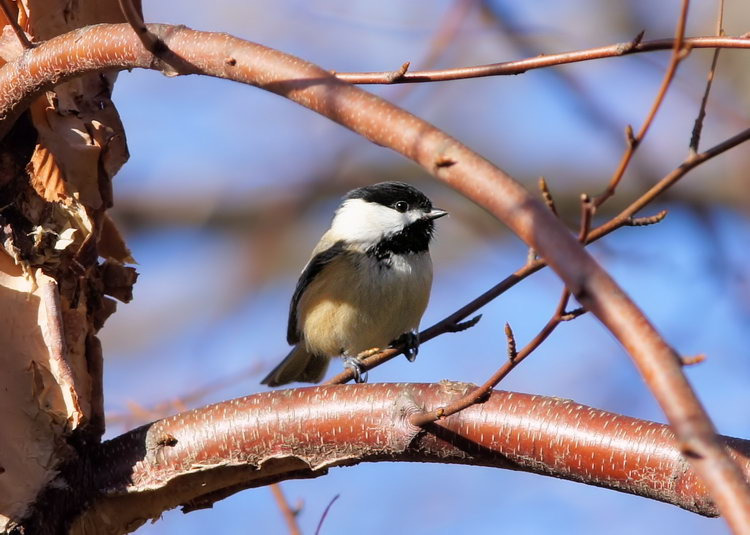
This is a Black-capped Chickadee that I managed to get pics of recently. Chickadees are not hard to come by, especially at this time of year, but they are quick-moving little buggers and can sometimes be tricky to photograph. These guys are with us all year round but we tend to see much more of them during the winter months. They do breed here but I think it’s possible that we also see migrators from northerly climes enjoying our balmy weather. I’m just guessing here. I am not a birder, I’m just paparazzi.
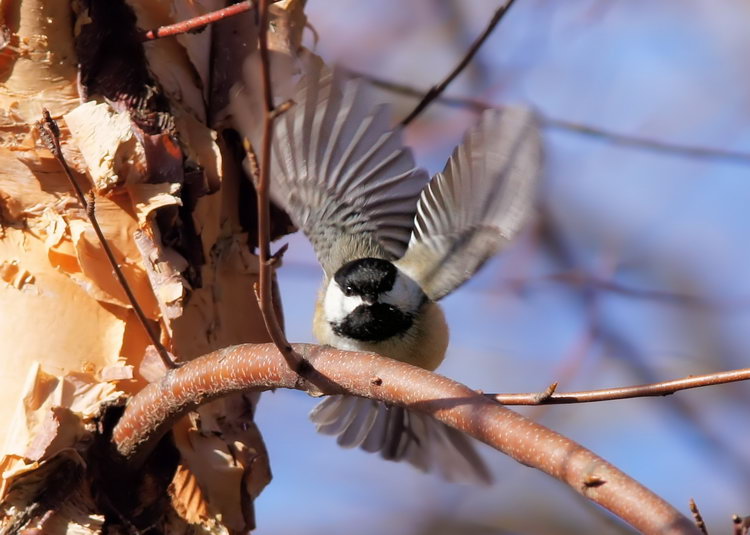
  I took these pics at Frank Melville Memorial Park in Setauket. This is such a wonderful park and it has so much to offer no matter what the season. There are several easily accessible trails that take you through some very interesting woods. There’s even a stand of bamboo that not only looks cool but sounds even cooler if there’s a breeze. There’s also two ponds and a saltwater marsh as well. Sounds good, huh? You should come and check it out for yourself. This place is a pleasure at any time of year. JK
Queenfisher

Monday, January 7, 2013,

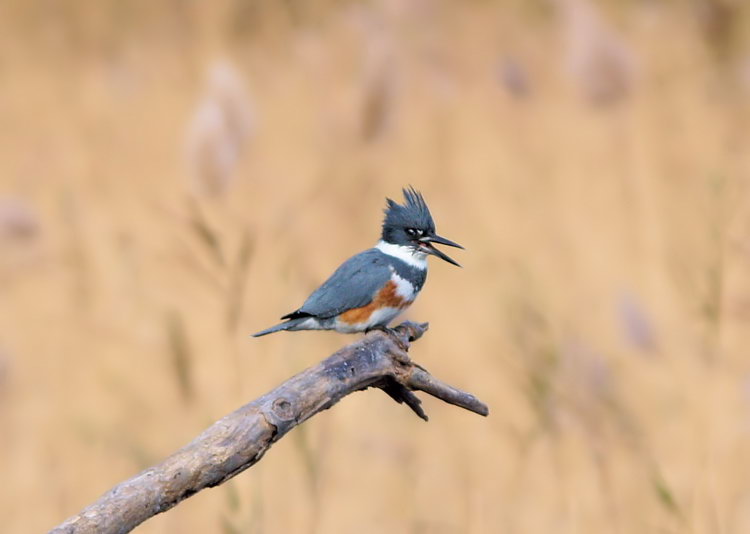
This is a female Belted Kingfisher. You can tell because males don’t sport that rusty coloration on their bellies and sides. The males are all white below that slate-blue ‘belt’ across their chest. These ‘Blue Jays on steroids’ as I like to describe them are amazing hunters. They wait by rivers, lakes, basically anywhere there’s small fish to be found, and then they dive head-first to grab fish from near the surface. That’s how they make use of that powerful bill. Small fish or not, this strikes me as a fearless way to make a living and these birds have always impressed me. I love to watch them at work. JK    

Meet Copper

Saturday, December 29, 2012,

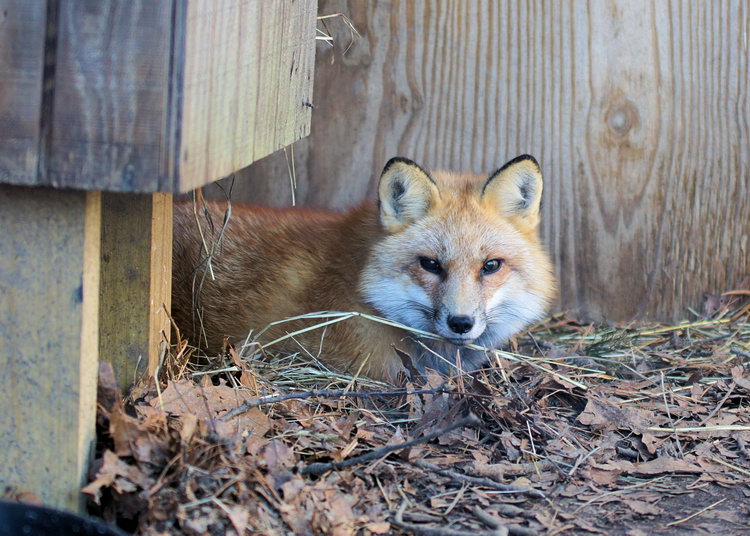
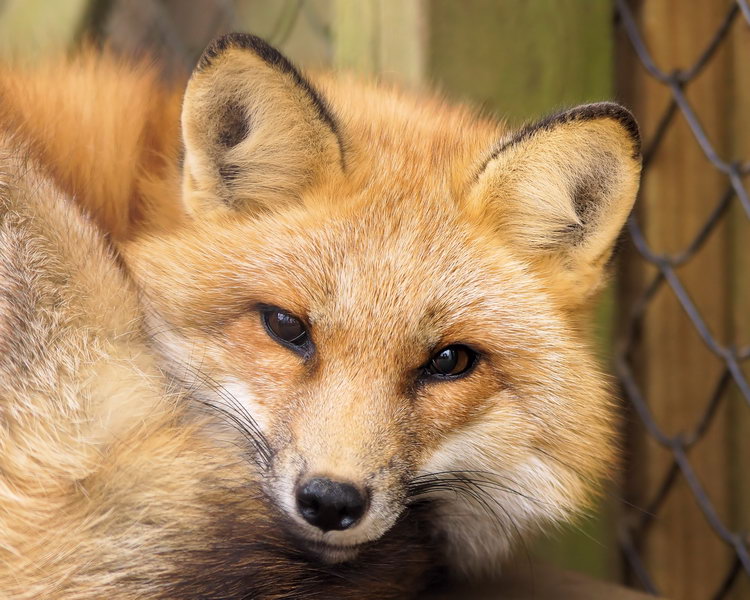
This is Copper, the resident fox at Sweetbriar Nature Center. He came to Sweetbriar as a young kit about four years ago. He’d been hit by a car and while the docs were examining him they discovered that besides his injuries, Copper had apparently been born with some birth defects. This little guy – all foxes are little – is blind in one eye and very nearly so in the other. He’s also missing one of his rear paws, although he gets around so well that it almost goes unnoticed.


Copper recovered from his injuries but his birth defects made him an unsuitable candidate for reintroduction to the wild. A blind fox cannot hunt. Or avoid cars for that matter. So instead, Copper spends his days in an enclosure built specifically for him. That’s not only great for Copper but it allows visitors at Sweetbriar to have a good look at these very secretive critters. These guys are as shy as they are beautiful. I’ve been playing in the woods for over 45 years and I could count up all of my fox sightings without even starting on my toes. Now I can visit with Copper anytime.

Copper can be seen every day at Sweetbriar Nature Center in Smithtown. Go check him out. Admission is free and there’s plenty more to see and do once you’re there. JK

Great Cormorant At Frank Melville Park

Tuesday, December, 18, 2012,

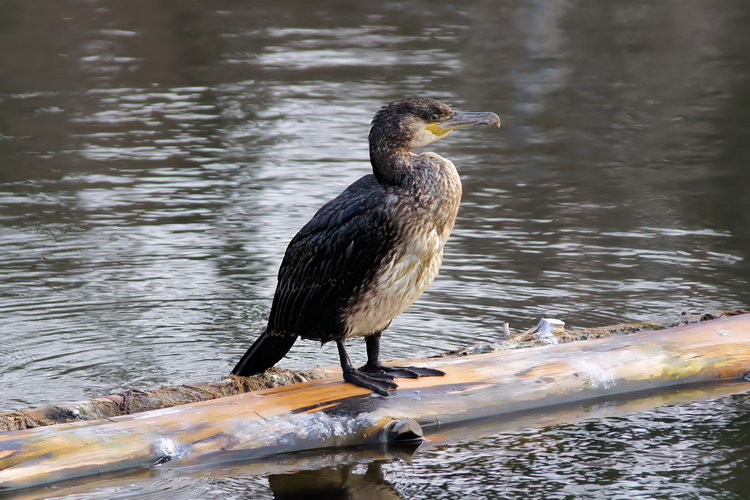
I took this pic three weeks ago but I was unsure what it was so I was bit hesitant about posting it. When I first came upon it, I knew it was a cormorant. Their body shapes are pretty much unmistakeable. And as most of the cormorants I ever see are the Double-crested ones, my first thought was “what the heck are you still doing here?!?” This guy was bit thicker in build than my “usual” cormorants, not to mention he was out of season so I got to thinking that, maybe, just maybe, I had managed to capture a new-to-me species. This is always a cool thing. Many of my birder friends keep lists of the birds they’ve see. I don’t count them till I manage to get a pic of them. This not so much because I hold myself to higher standards than other birders, but, rather, it’s because I am a lousy birder. I am probably the worst birder in Audubon. I don’t trust myself or my identifications. Look, I just take the pictures. This is, in fact, how I got involved with Audubon in the first place. I would send pics out to my birder friends asking for species identifications. Next thing I know, I’m the photographer for the Four Harbors Audubon Society. Not that this is a bad thing. Now I know even more folks to query about birds I can’t identify. Plus, all those wonderful folks are forever pointing me to good places to take my camera. 

Looking through my Sibley’s it seemed to me that maybe I had captured a juvenile Great Cormorant.  However, on this occasion my friends at Four Harbors were non-committal.  A couple of them were even wiseguys, despite the fact that that’s my job. So I posted this pic at Audubon New York’s Facebook page. These folks have come through for me before and they did this time as well. And, as it turns out, I managed to guess this guy’s identity correctly.  He is indeed a juvenile Great Cormorant. Woo hoo! Always nice to get a new species under my belt. JK

Northern Shovelers

December 2, 2012,

One of my responsibilities as photographer for the Four Harbors Audubon Society is coming up with a bird of the month for our website. One of my fellow board members suggested a winter duck so I went to Frank Melville Memorial Park in Setauket. This park is terrific for waterfowl. The two ponds here attract a wide variety of wintering birds. One can find all kinds of ducks here. For a photographer it can be like shooting fish in a barrel or ducks on a – well, you get my point.

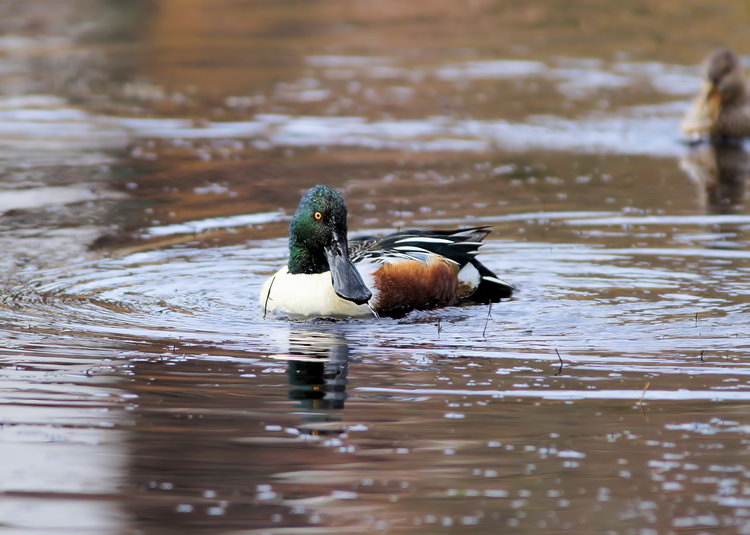
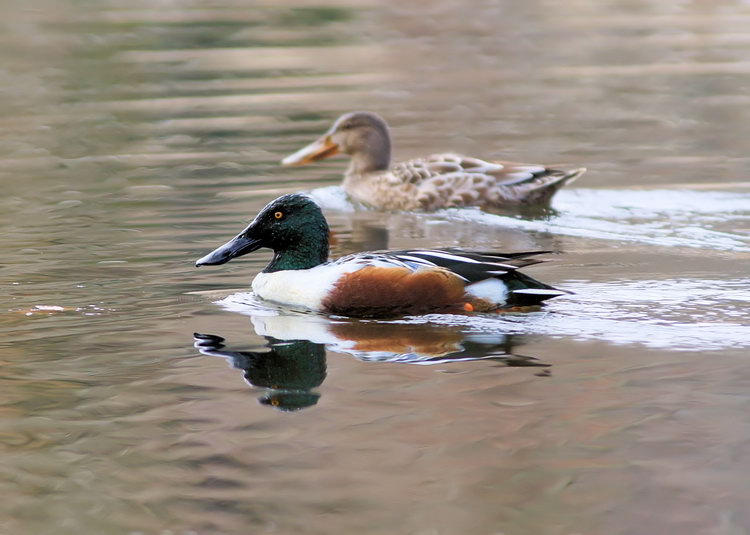
These are pics of a pair of Northern Shovelers. Check out those bills. They’re bigger than the rest of their heads! It’s no wonder that these birds tend to keep their bills pointed down. The real wonder is how they manage to stay upright at all.

My friend Elaine says, “Gotta love that bill!” and my friend Luci once described it as a “wonderful adaptation”. Meanwhile, these are the ducks that had to sit by themselves in the high school cafeteria.

All kidding aside, those bills really are amazing. That over-sized shnozz  is used to sieve edible matter – be it zooplankton, crustaceans, or seeds from the water. This gives these guys a one-up on the other dabbling ducks that visit us, even if they do look like mutant Mallards. JK