Thursday, October 29, 2020,
JK
Thursday, October 29, 2020,
JK
Wednesday, October 28, 2020,
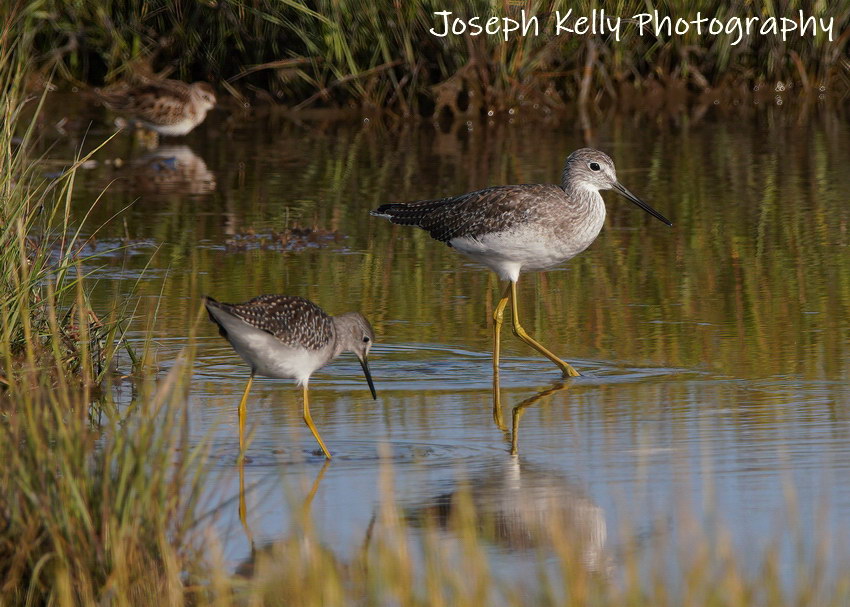
This is a photograph of two different species of Yellowlegs. That large bird, the one in focus, is a Greater Yellowlegs. The bird in the foreground is a Lesser Yellowlegs. Note the size difference despite the fact that the smaller bird is a foot closer to the camera. Another identifying character is the size of its bill relative to the size of its head. The Greater Yellowlegs has a comparatively longer bill. These two species can be very difficult to differentiate and while I had guessed correctly, I’d like to thank my friend Mike Farina who is the Conservation Biologist at the Marine Nature Study Area for confirming my guess. Over the past two years Mike has been essential to us here at Joe Kayaker. He’s not only invaluable when it comes to identifications but Mike is completely knowledgeable about habitats and animal interactions. We just may offer him one of the unpaid staff positions at Joe Kayaker. JK.
Tuesday, October 27, 2020,
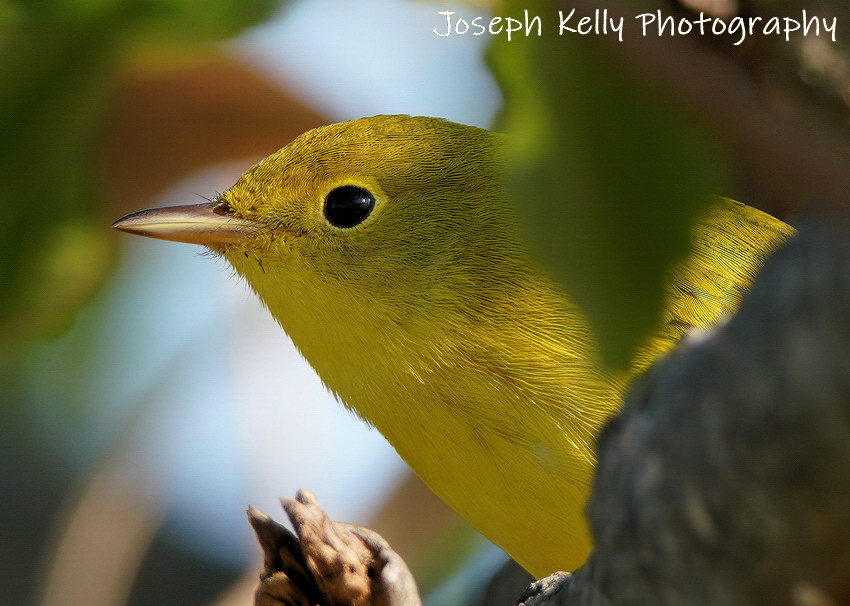
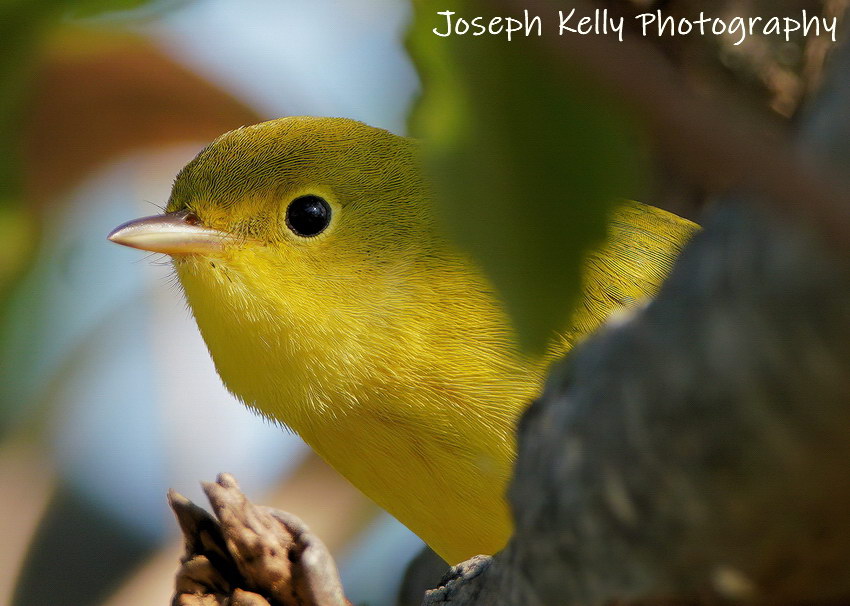
This is a female Yellow Warbler that I found at the Marine Nature Study Area in Oceanside. She was flitting from branch to branch, behind this leaf and that one, in her search for insects. She was a real powerhouse of movement.
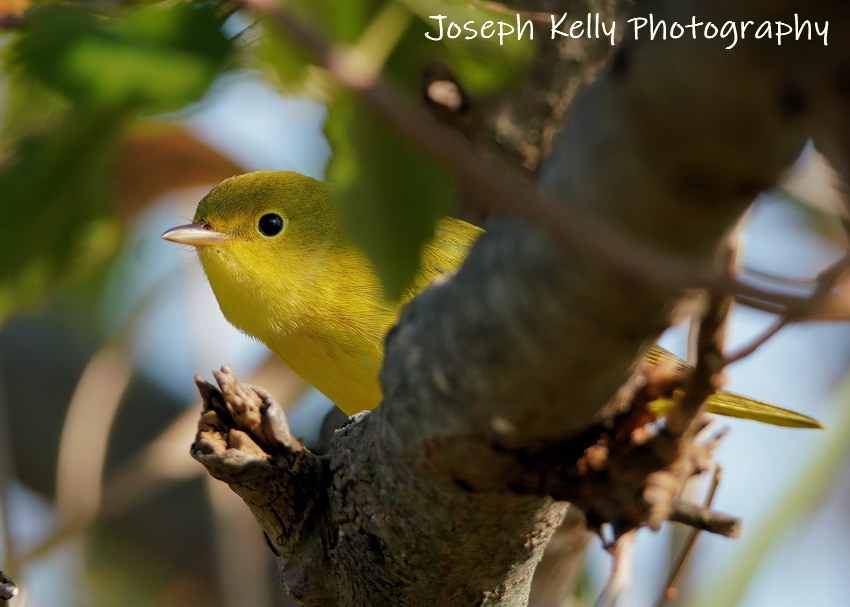
I’d see her here, try to get her into focus, and then she’d be there. This bird drinks way too much coffee. I’m a manual focus photographer, for several reasons but that’s fodder for another post. It would have been necessary in this situation anyways because of all the leaves and branches. Autofocus cannot always know exactly what you’re aiming at, especially with a busy background – and foreground – like this. I was lucky, not to mention a bit dizzy, to have managed to get these shots in focus.
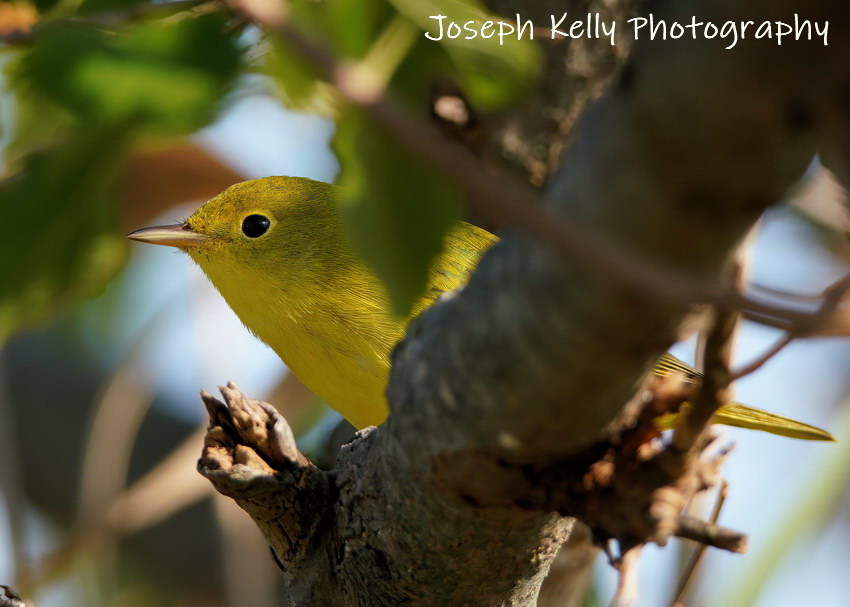
She is beautiful though. Don’t you think?
JK
Monday, October 26, 2020,
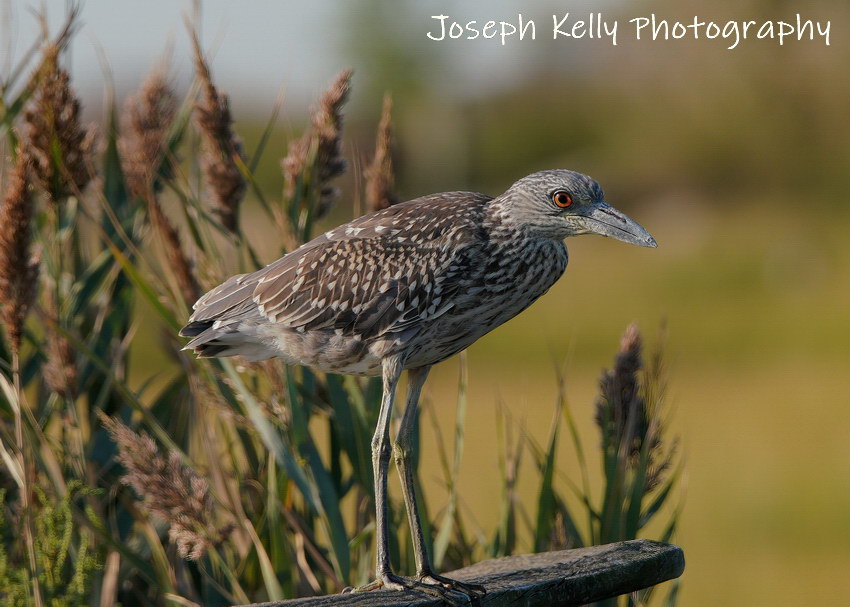
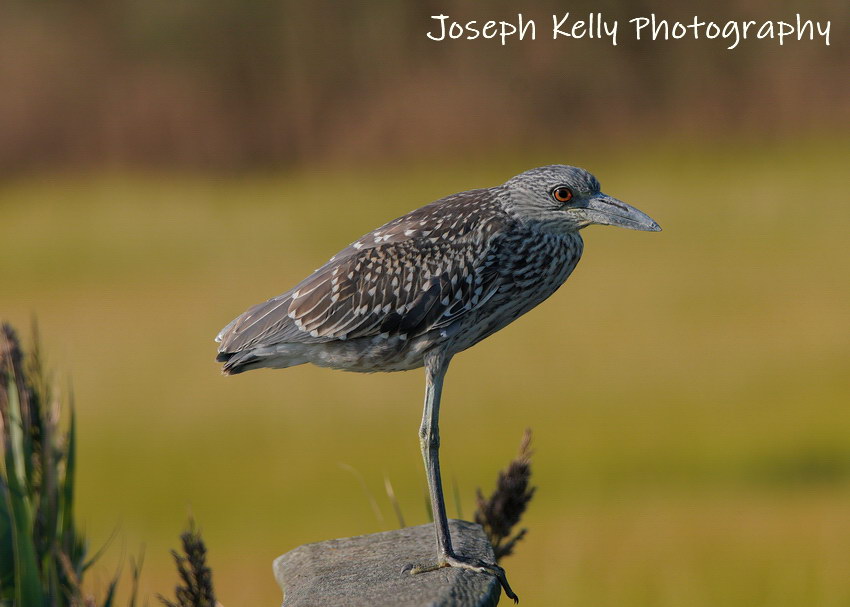
These pics were taken at the Marine Nature Study Area in Oceanside. This is a juvenile Yellow-crowned Night Heron.I find the juveniles of this species to be super photogenic. I am absolutely in love with them. It’s late in the season and by now, most have them have already begun traveling south but I am truly enjoying these last looks. I hope you will as well. JK.
JK
Friday, October 23, 2020,
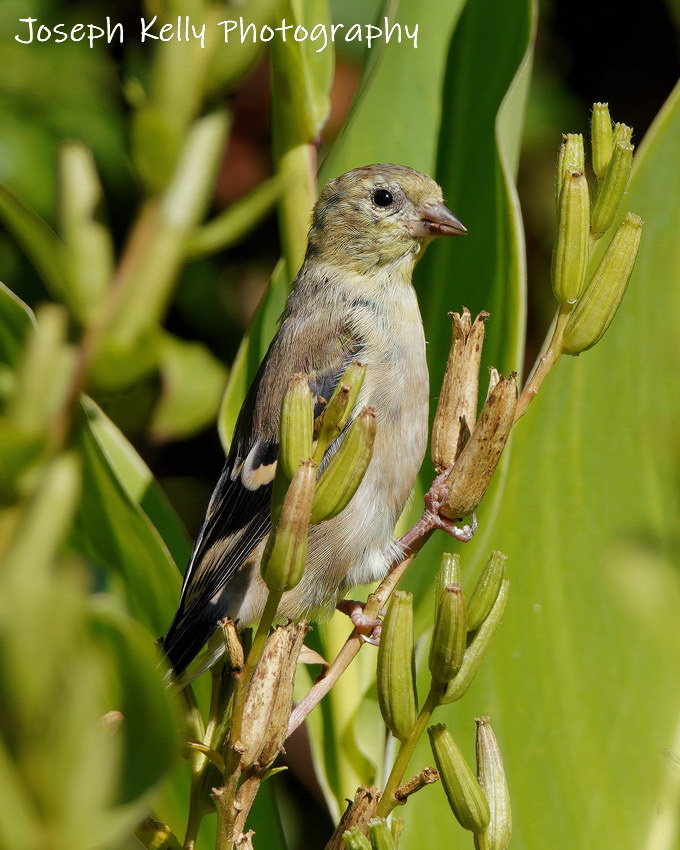
This is a Goldfinch sitting amongst Canna Lilies and feeding on the seeds of an Evening Primrose. The flowers are gone but, as with almost all flowers, the seeds remain. Their beauty may have faded but not their usefulness. When the petals of a flower fall away, the flower hasn’t died. The fact is that this is the next and perhaps most important stage of that flower.
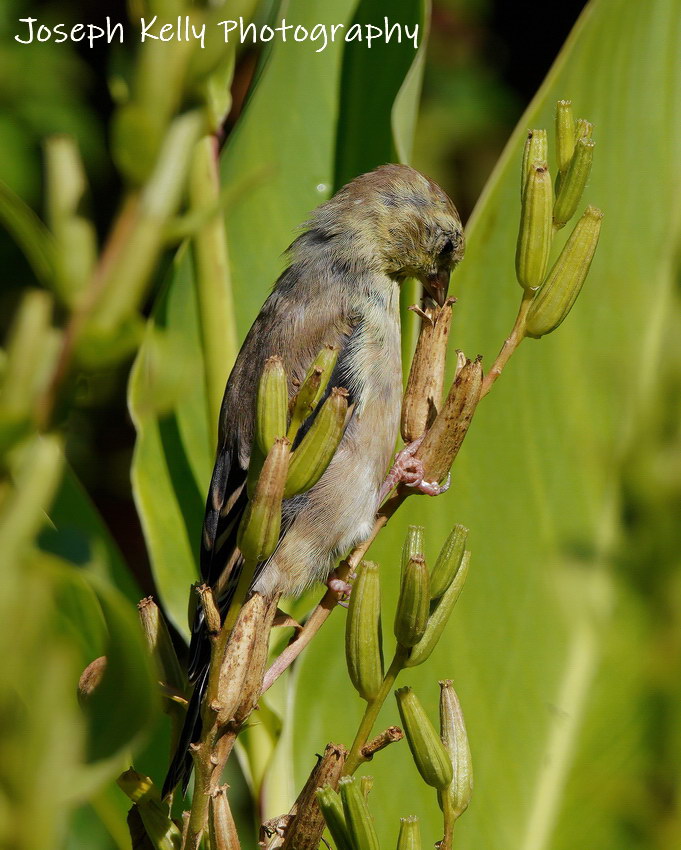
Flowers are all about pollination. That is their very purpose. They look and smell pretty to attract insects that will bring the pollen of a male plant to the stigma of a female plant. Once the female plant receives the pollen, the process of germination begins to take place. Germination is basically how a plant creates seeds. I’m dumbing it down a bit but only because I’m not terribly smart to begin with. Seriously though, it’s an involved process, but those are the basics.
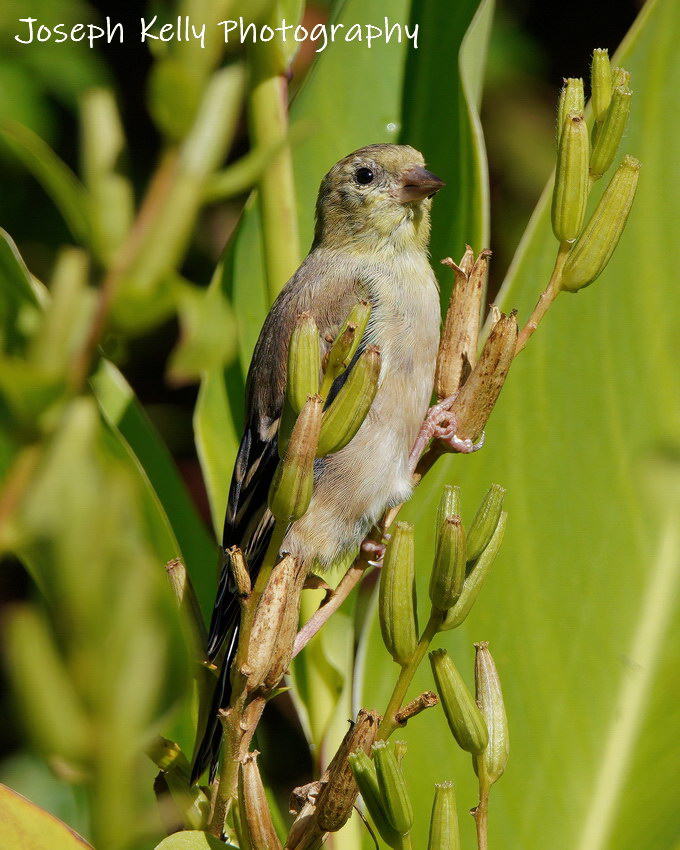
The result is that after the petals are gone, a flower is not done being a flower. In fact, the reason for there even being a flower is finally coming into fruition. You see, a flower is all about the next generation, and without that flower, there is no next generation. The seeds that are produced by each flower represent the next generation of that particular plant. Those very same seeds also feed a great variety of animals, including this Goldfinch. JK.