Ruby-Crowned Kinglet At Avalon

Monday, December 19, 2011,

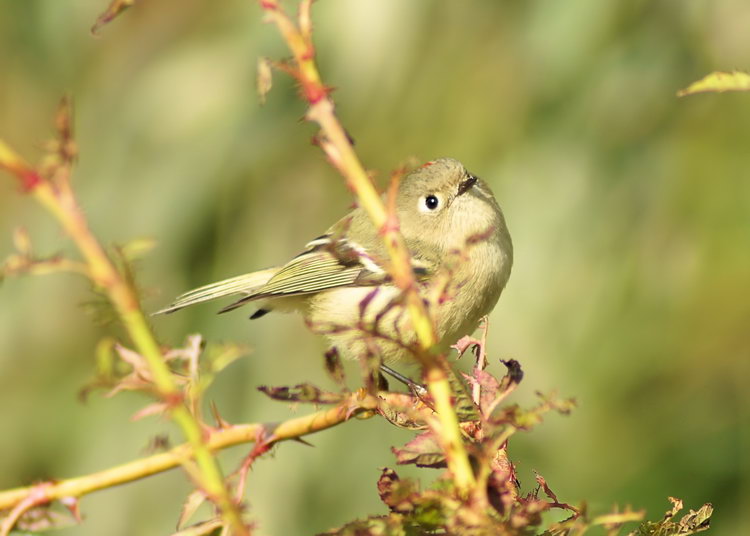
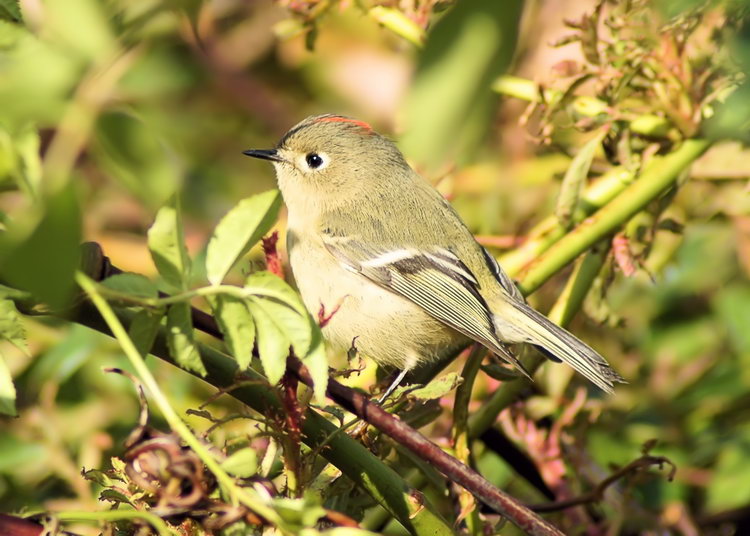
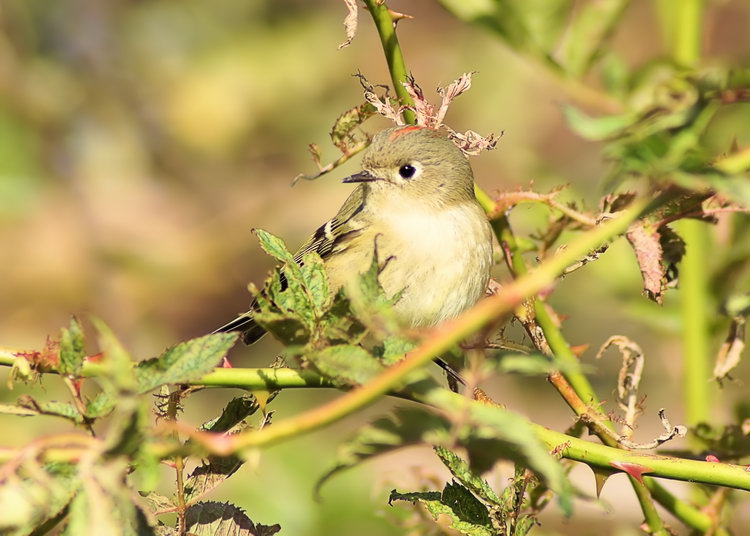
Here are some pics I took of a Ruby-crowned Kinglet at the end of October. Halloween, actually. These  tiny guys are wintering here. I’m freezing my butt off and they’re here to enjoy the balmy weather. Go figure.

Can you see that narrow red stripe along the top of his head? That’s its ruby crown. That stripe also identifies it as a male because the females lack that bit of color. Look, the ladies have more to worry about than wearing fancy colors, okay? Not a one of those fancy-headed males has to carry around five to eleven eggs come breeding time, do they? That’s right, these micro-birds, as Kaufman calls them, lay a heck of a lot of eggs. Just not around here. You’ll have to go much further north to see that. In the meantime, enjoy these guys while they’re here.

JK


Bird’s Nest At Avalon

Saturday, November 26, 2011,

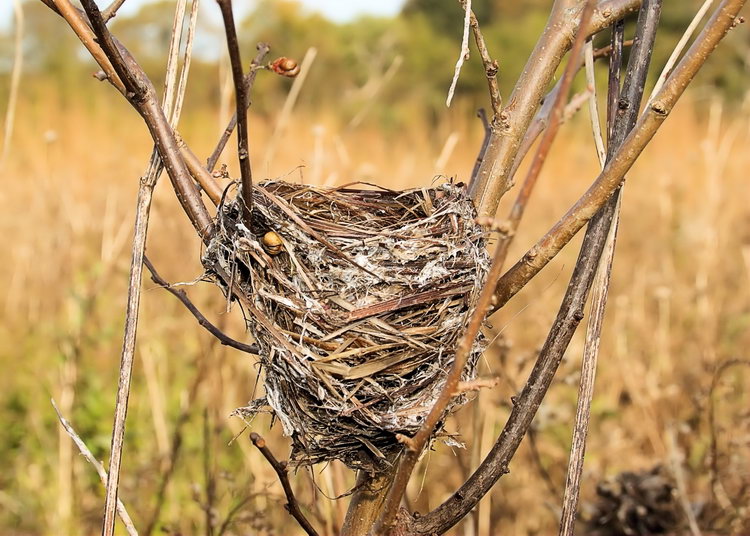
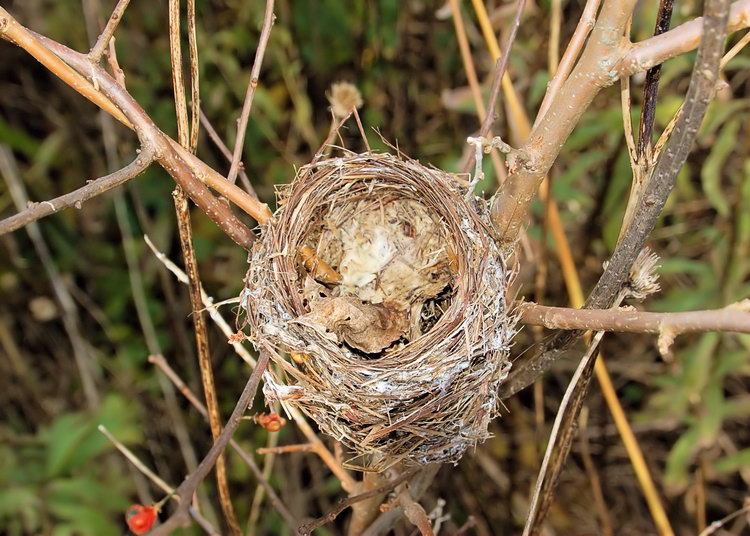
These are pics of a bird’s nest I found in the farm fields at Avalon. It’s probably been there since last spring. It’s only about six feet off the trail and at a height of about 5.5 feet, it’s pretty much eye level for many of the folks that tread these paths but because the wildflowers that grow here are so thick and tall this nest was probably invisible to nearly everyone. I myself have walked past this nest countless times without ever even suspecting it’s existence. It wasn’t until the autumn die-back of most of the flowers here that I discovered it.


I sent this pic out to a few friends and the general consensus was that this was a Red-winged Blackbird’s nest. I was the only dissenter, but only because the only confirmed Red-wing nests I ever see are suspended from  reeds or cordgrass right on the river. I wouldn’t expect to see one here in the farm fields but I did some reading and according to Arthur Cleveland Bent, while nesting near water seems to be a preference for Red-wings, upland meadows are also very suitable. The fields at Avalon certainly qualify as upland meadows and during the spring and summer I often see Red-wings here so I am fairly certain that my friends are right about this being a Red-winged Blackbird’s nest. JK

Mantis Laying Eggs

Monday, October 31, 2011,
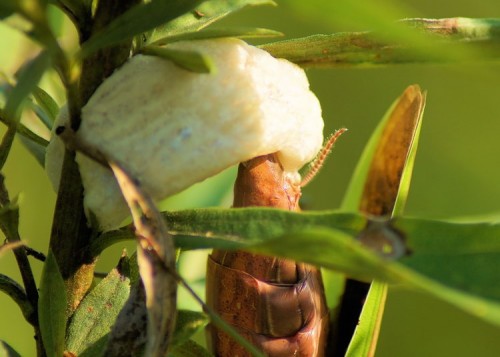
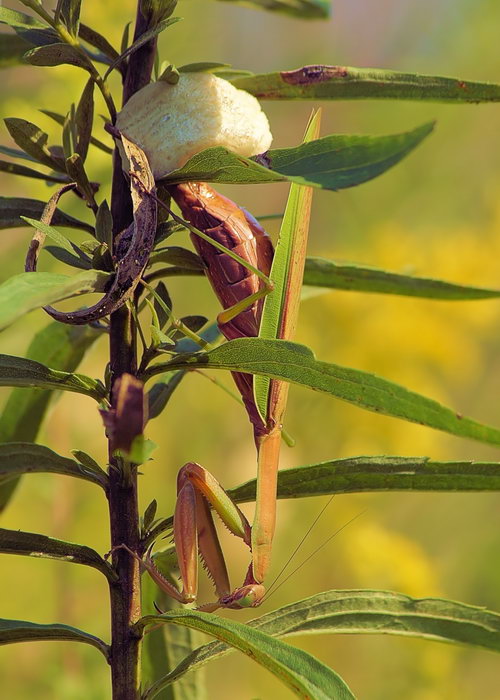
Here are a couple of shots of a female, (obviously), Praying Mantis laying eggs on a Goldenrod stem. This was not an obvious fact when I first came across this scene. I was walking through the farm fields at Avalon – has anyone noticed how many of my recent posts come from Avalon? – when something, maybe it was movement, I really don’t know, caught my eye. When I first saw it, I knew I was seeing something cool. (Yes, I am a product of my generation.) Some sort of large segmented worm that was seated in a leaf bud was making a cocoon for itself.

At this point I should maybe explain that Joe Kayaker is in need of bifocals that he does not yet wear. There could be some vanity at work here but let’s get back to the story at hand. Anyways, I took off my glasses and leaned in close for a better look. So cool, really. I really love nature at work. But at this point, I’m still seeing what I think is some weird caterpillar or segmented worm, although I don’t know of any worms that make cocoons. So I re-goggle myself (I can see, I can see!) and switch cameras for a wider angle (less close-up) and there is a mantis laying eggs. What I thought was a weird sort of worm was, instead, a pregnant abdomen and the leaf bud turned out to be the wings of an upside down Praying Mantis. I laughed right out loud. A real “duh!” moment for me but, hey, still very cool nonetheless.

What these pics don’t show is how ALIVE the abdomen was. It was moving this way and that while it was  creating the Ootheca, or egg case. The back end of this critter seemed to have a mind of its own. Eyes, too, for that matter. It really seemed to be independent of the mantis. In fact, the rest of the Mantis’ body never moved during the twenty minutes I spent documenting this experience. Meanwhile, that back end was bending in ways I wouldn’t have thought possible. I usually think of insect bodies being stiff and tough. Exoskeletons, right? Not in this case. The abdomen was downright supple. It even looked soft and puffy in places. Ah well, Mother Nature never ceases to educate and entertain me. JK