A Gobbler Up Close

Saturday, March 3, 2012,
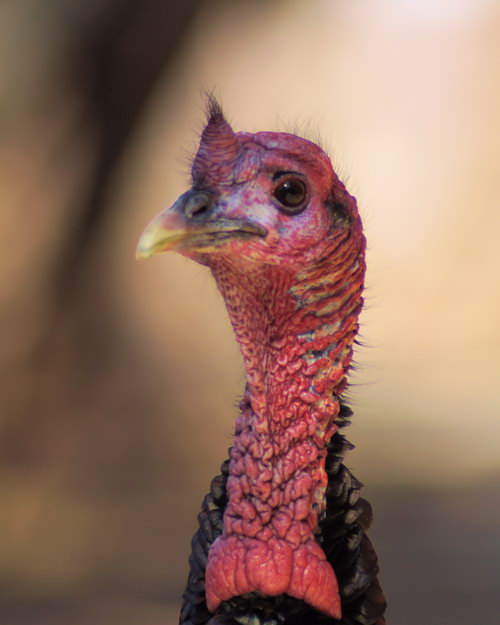
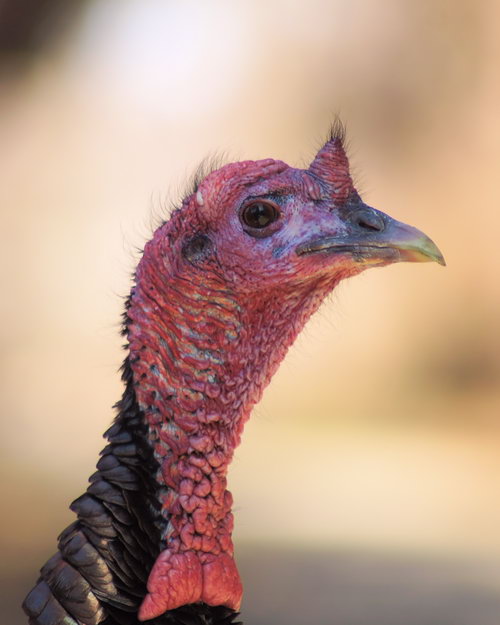
I was out east a few days back, ostensibly to help a friend deliver an armoire to Bridgehampton. He didn’t really need my help but it gave us an excuse to check possible kayak launch sites and stop in at Morton Refuge. I was hoping to see some turkeys. I had seen four during my last visit at the start of the year but I failed to get any decent pics. I had some better luck this time. During our hike at Morton we came across the same bachelor group twice. All males, hence the name bachelor group, they were foraging in an open field when we first encountered them. A bit later on we saw them again, this time in a wooded area. These shots, both of the same bird, were taken there. These pics may also explain why turkeys have segregated flocks.  Think about it. If you were a turkey hen, would you want to look at that all year round? It’s amazing that the males are willing to hang out with each other. Maybe it’s a case of misery loving company. Or, perhaps, here is an example of beauty being in the eye of the beholder. I can’t speak for others but, in my mind’s eye, there few things more beautiful than a turkey on the Thanksgiving table. Yes, I realize I’ve drifted off topic but when I think turkey, I think Thanksgiving. Yum. JK
JK
Skunk Cabbages In January?

Sunday, January 8, 2012,

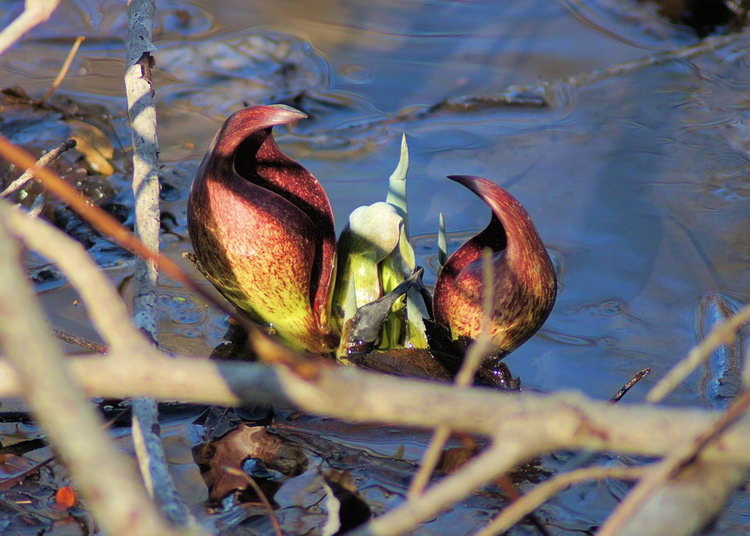
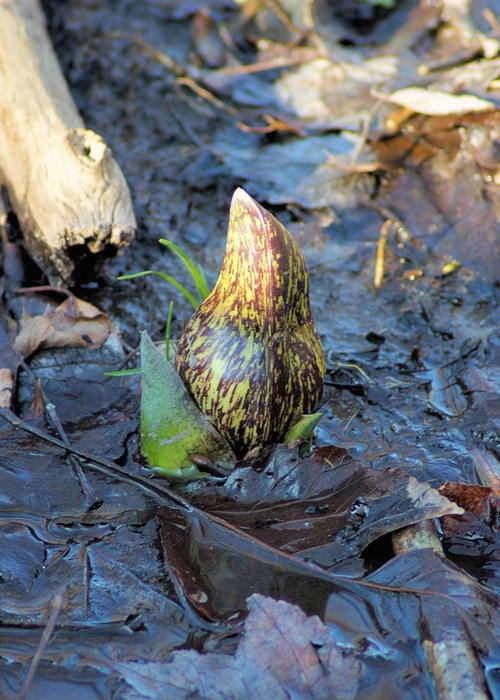
Here is a curious thing. These are pics of Eastern Skunk Cabbages I found on January 3rd at Morton Wildlife Refuge in Sag Harbor. Now, skunk cabbages are pretty cool on their own merits – we’ll get to that – but the curious thing here is that these plants are generally not seen till February at the earliest. Three days into the year has got to be too soon for these guys to be emerging. In fact, I was so sure that it was too early to be seeing skunk cabbages that I sent the pics to Isabel at Sweetbriar Nature Center. She confirmed my guess and said that the weather is confusing the plants. I think she’s right.

Skunk cabbages are usually the first flowering plants to emerge from the ground. Both John Eastman in Swamp and Bog and John Turner in Exploring the Other Island give February as when this plant should be making its debut. Maybe it’s this mild weather we’ve been experiencing but we haven’t actually had a winter yet.

The really amazing thing about these plants is that they are able to generate their own heat, enough even, to melt the snow. I know, big deal, right? I, too, can melt snow and I can write my name at the same time, but think about it: this is a plant that can melt ice. How cool is that? It’s that ability that allows it to appear so early in the season. But January? This has to be too early.

I sent the pics to some of my friends at Four Harbors Audubon Society to get their opinions.

Sue B. said, “weird and cool.”

Michele cried, “Invasion of the Body Snatchers!”

Elaine made comparisons to Audrey, the carnivorous plant from Little Shop of Horrors.

Indeed, at this point the plant does have a rather otherworldly look about it. Believe it or not, this is the flowering stage. Yep, this is as pretty as this plant gets. As Elaine explained to me, The reddish spike you see is the “spathe”, an adapted bud which never opens to reveal its flower within. There’s just enough space between its closed “petals” to allow air to circulate from its warm center and provide an odorous current that visiting, pollinating insects will explore.”

Pretty cool stuff about a pretty cool-looking plant. JK