Merganser On Carmans River

Wednesday, August 6, 2008

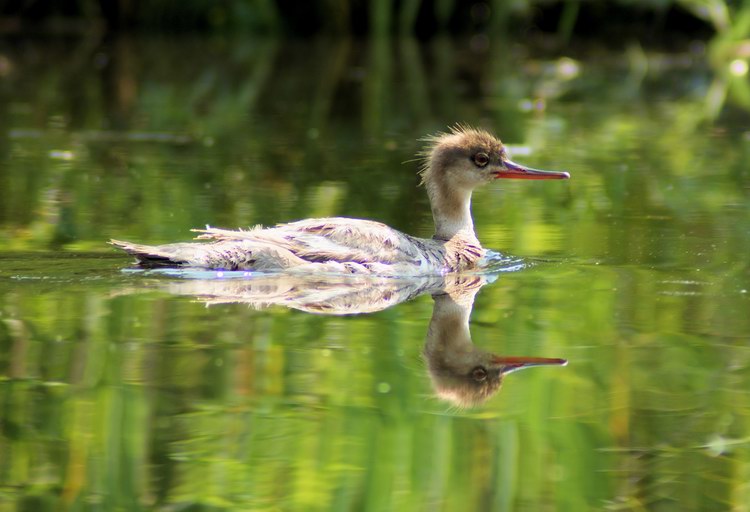
I took this picture a week ago today on Carmans River. It is, I believe, a female Red-breasted Merganser. In my three most recent trips along the Carmans I’ve made about five sightings of this species, always female and always alone. It’s possible that I’ve been seeing the same bird each time. Mergansers are diving ducks with serrated bills – cool, huh? – that they use to catch small fish and crustaceans. JK

Wild Turkeys

Monday, August 4, 2008

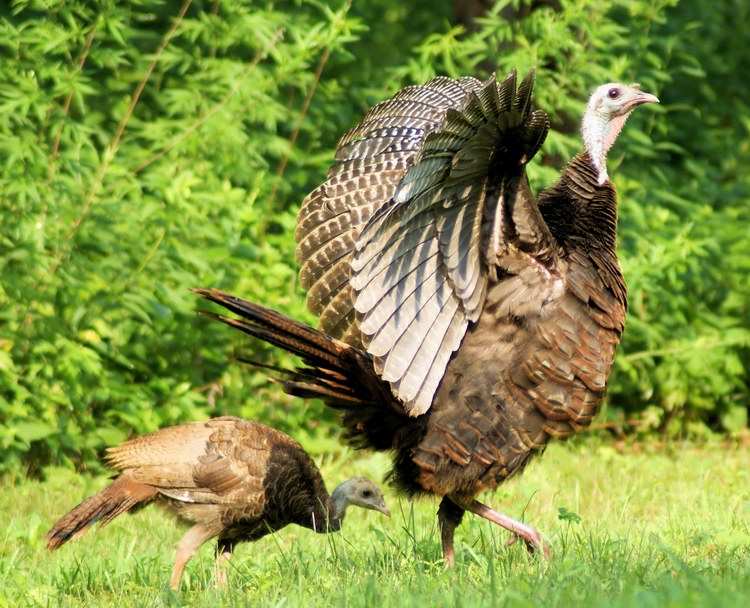
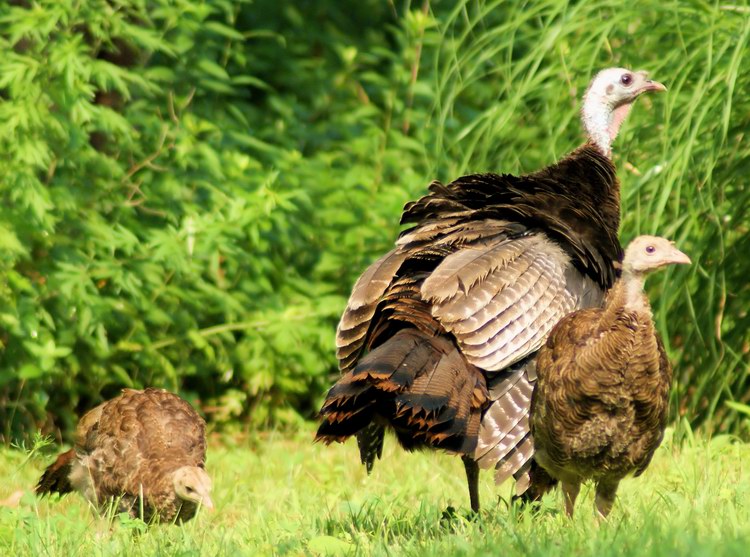
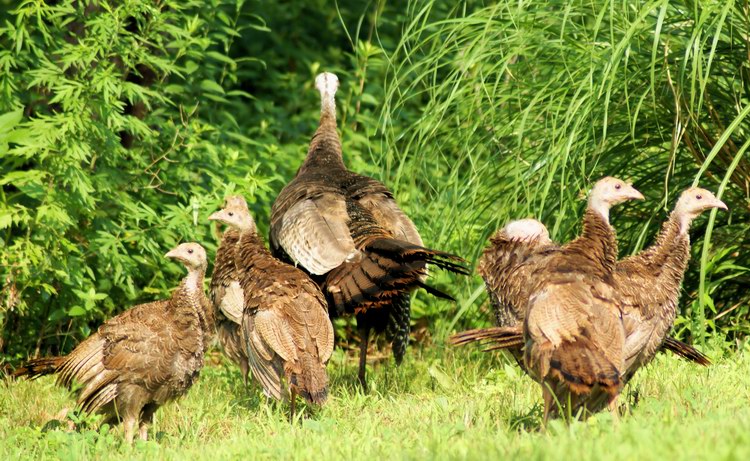
This is the group of Wild Turkeys that I was looking for when I came across the fawn that I posted a pic of last Monday. When I first found the turkeys it was still raining and very dark in the woods. The pics I took didn’t come out very well at all. Later in the day, the skies cleared and so I thought I might try to find the turkeys again. After searching for only about twenty minutes I found them in a clearing that borders my neighbors property. Finding wildlife is rarely that easy. I was lucky, pure and simple.

This group is comprised of a hen and her young, which are called poults. I counted six babies but my neighbor had counted seven a week before. It could be that I missed one in the woods but it could also be that one was lost to predators. There is a fox living in the area as well as several hawks. JK

Osprey On Carmans River

Friday, August 1, 2008

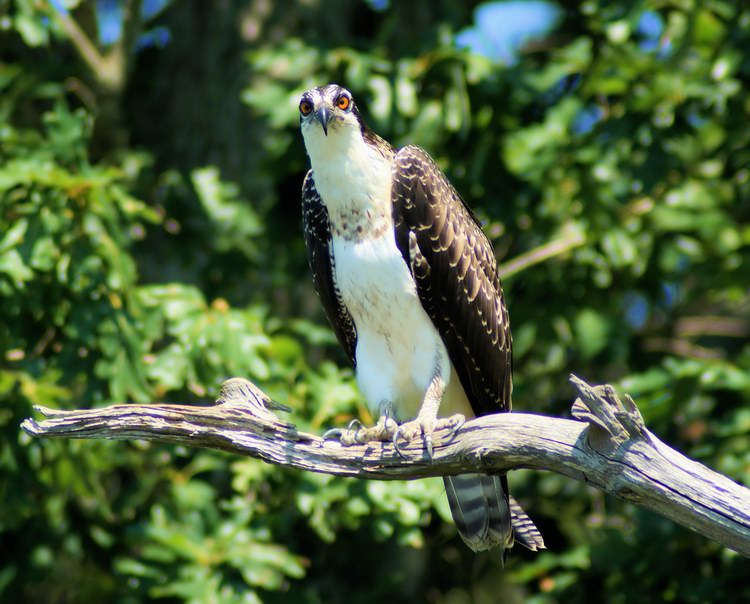
What are you looking at?

Last week I took a trip with some friends and we kayaked the Lower Carmans River. This river used to be one of my favorite haunts when I lived on the south shore. I would kayak there at least once a week in good weather. Since I moved close to the Nissequogue River I only rarely make it over to the Carmans but that’s already changing. I had such a good time and so many photo ops that I’ve been back twice since my initial visit. You can expect more posts concerning the Carmans in the coming weeks. Be prepared. I may bore you with Osprey shots. JK

Cygnet

Thursday, July 24, 2008

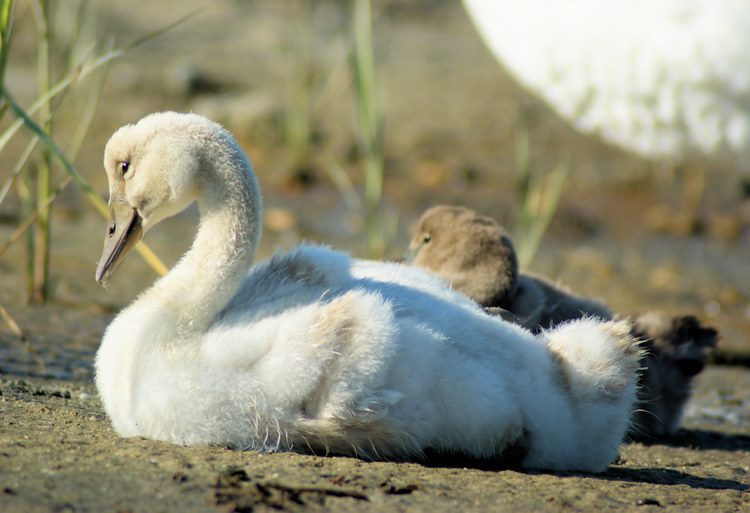
This is a young swan or cygnet. The young of Mute Swans come in two color phases, light and dark. This bird is of the lighter variety. It and its darker colored sibling behind it are still covered in down. Lacking proper feathers, they cannot fly yet but they swim just fine. Both birds will grow up to wear the same white plumage as their parents. JK

Chicks On The Beach

Friday, July 18, 2008
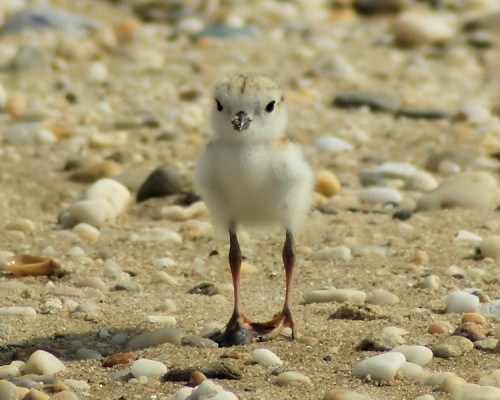
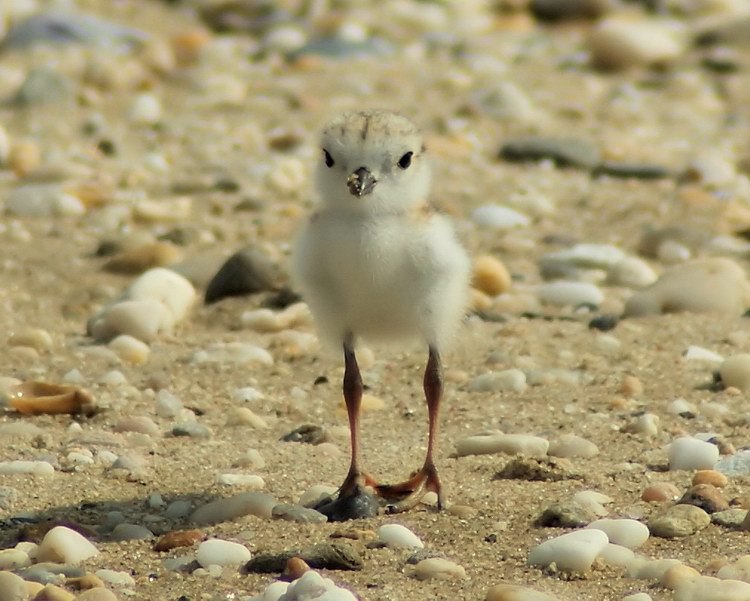
Earlier this week I promised to post some pics of Piping Plover chicks. This little guy seemed as interested in me as I was in him but a few peeps from Mom and he headed back to her.
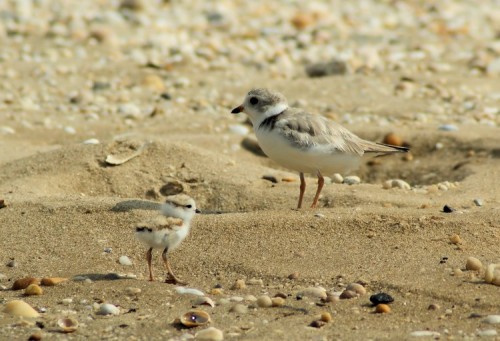
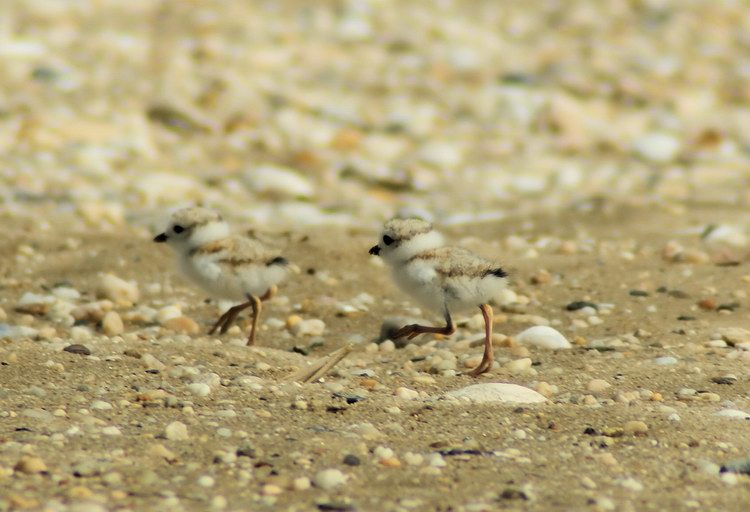
This shot of a chick with one of its parents shows the size difference between the two. Piping Plovers are not that big to begin with.

These guys are very difficult to photograph. When they’re moving, they’re moving fast. And when they stop, they melt right into the background. Those fuzzy edges just disappear and you can’t tell the bird from the sand.
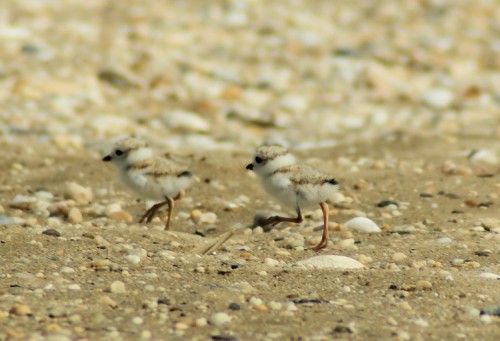
June 12 was the first day I saw one of the plover chicks over at Sunken Meadow Park. I only saw the one chick that day but I’ve seen others since, but never in any great numbers. I don’t think I’ve seen more than five chicks in any one visit to Sunken Meadow. Of course, my view of the nesting area is from the water inside the inlet, so I don’t see all there is to see. You can walk around the perimeter of the nesting area but I prefer to disturb the birds as little as possible.
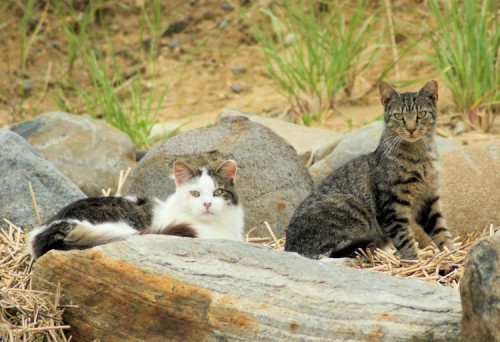
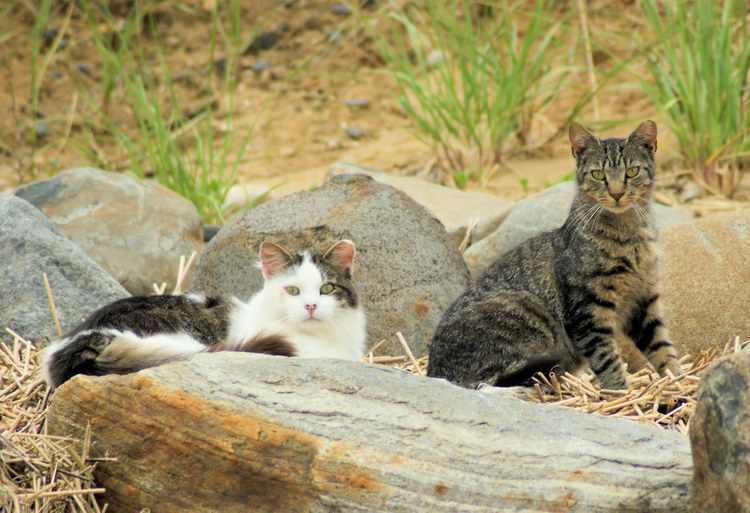
Now, anytime you have chicks on the beach, you’re going to find some cool cats checking them out. These two felines were at the base of the bluffs at Kings Park dreaming of ways to get across the water to Sunken Meadow. At low tide you or I can walk right across but I don’t think it’s a trick a cat wants to try. JK