Tuesday, May 14, 2019,
JK
Tuesday, May 14, 2019,
JK
Monday, May 13, 2019,
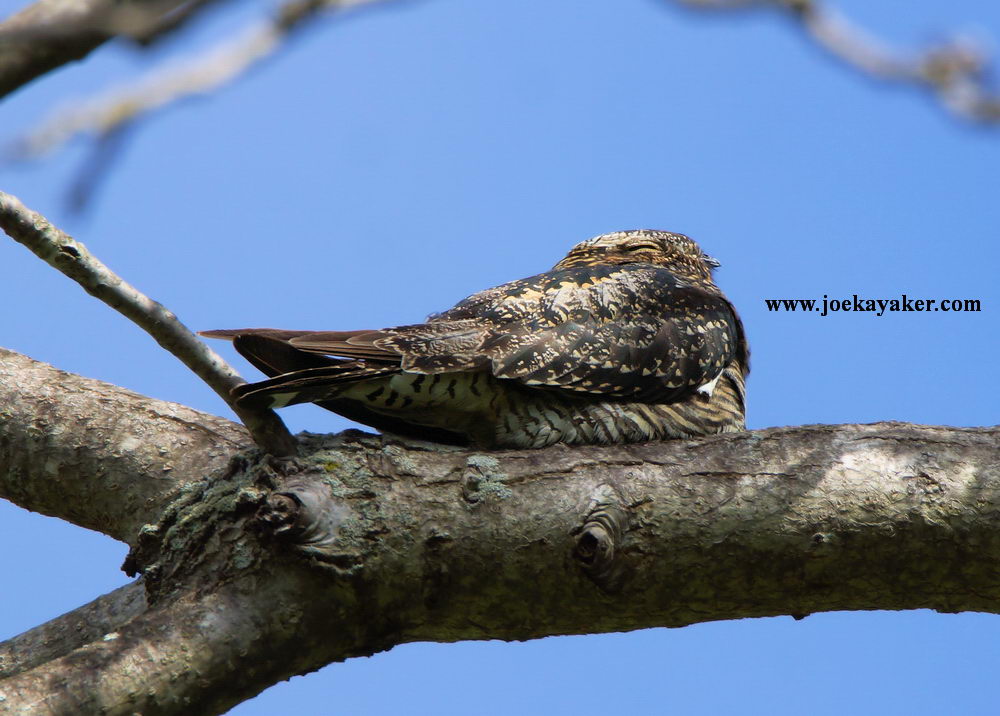
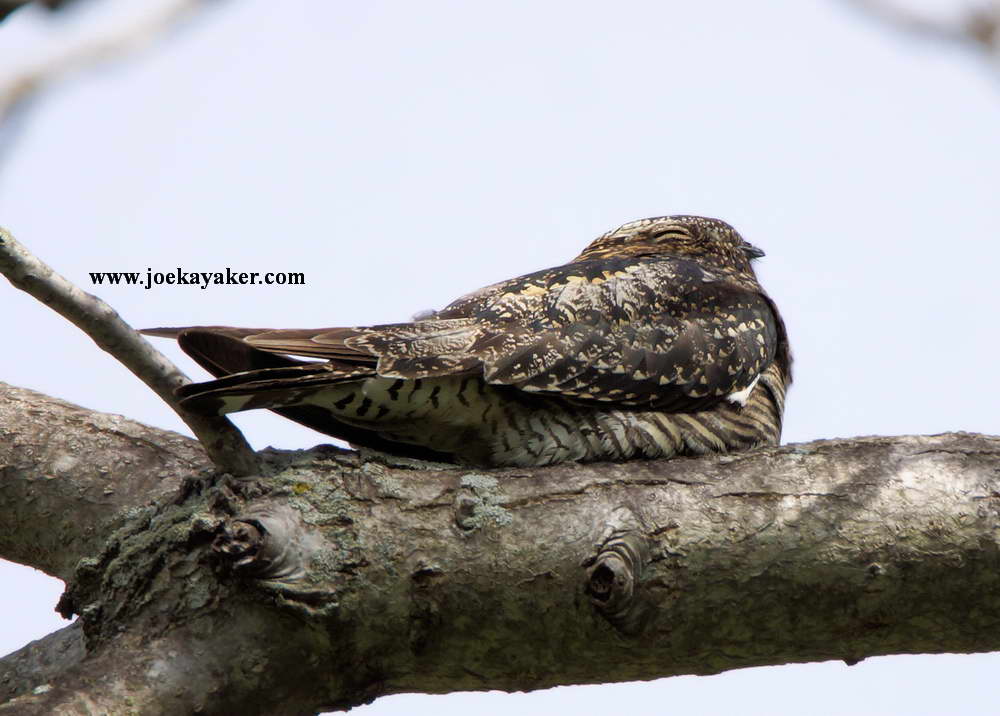
Four Harbors Audubon Society has monthly bird walks at Frank Melville Memorial Park in Setauket. I attended the most recent walk on this past Saturday. I had arrived a couple hours early in part to see what I could see, but mostly because, well, I really like that park. It’s a great place. As I was wandering around, I met up with a fellow photographer. We were comparing notes and she mentioned that she had seen a Common Nighthawk snoozing away in a nearby tree. These are photographs of that bird.
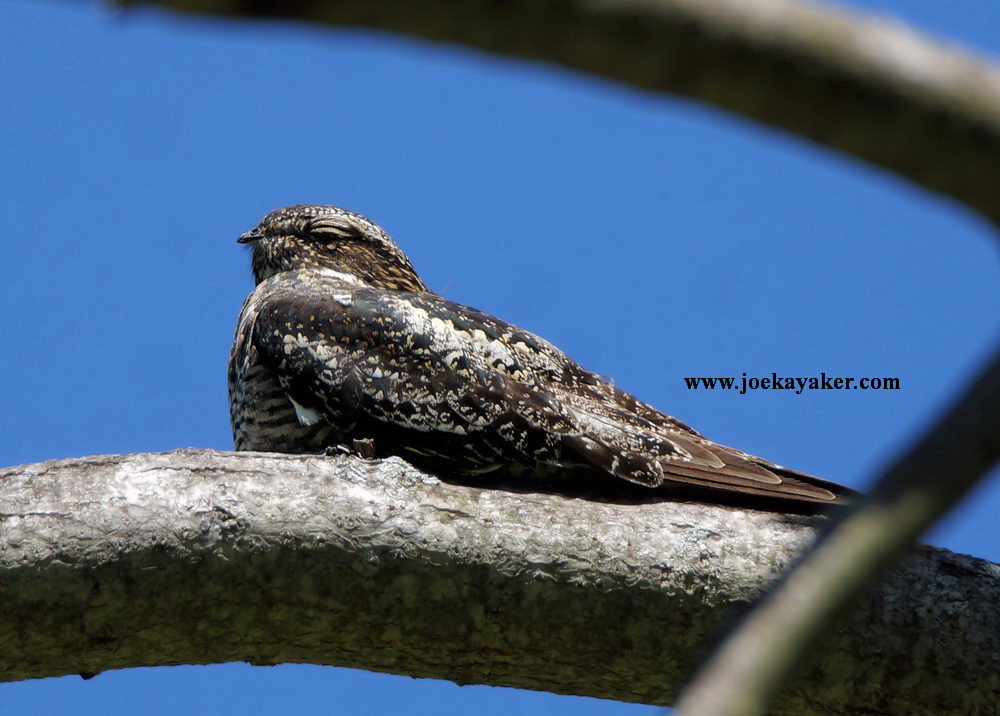
At the appointed time, I joined the Four Harbors group at the starting point of the walk, which is next to the Setauket Post Office that borders the park. When I saw my friend Luci, who is one of the leaders of our bird walk, I showed her one of the photographs I had taken of the Nighthawk. Here is a bit of our exchange:
Luci asked, “Where did you take this? Was it here? Can you show me where it is?”
I answered, “Yes but then I’ll have to kill you”. Yeah, I am a wiseguy most of the time.
Luci replied, “You can kill me, but show me the bird first”. Luci can be a wiseguy too.
And that, my friends, is a typical birder for you.
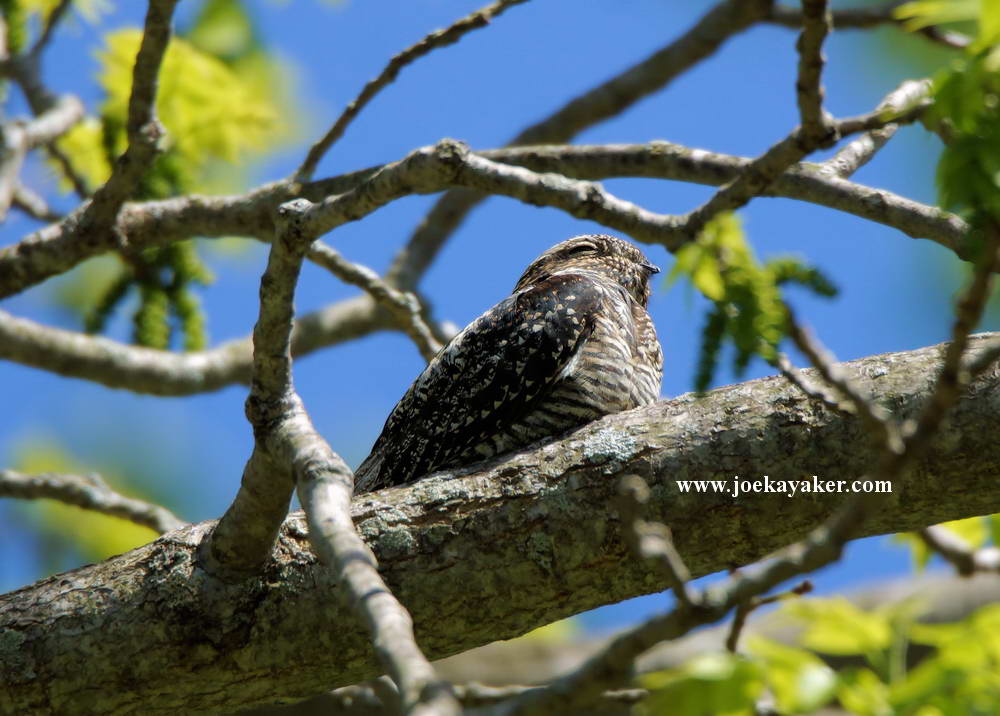
Perhaps, a little explanation is due here. Nighthawks are not just another bird to us at Four Harbors, especially at Frank Melville Park. In 2016, some observers, including celebrated author Carl Safina and two of our board members, Patrice Domeischel and John Turner, noticed a multitude of Nighthawks flying in the skies above the park. They decided to start what became known as the Stone Bridge Nighthawk Watch. You can click on the link for more information. The gist of it is that Four Harbors counts migrating Nighthawks. This is a citizen scientist project and all are welcome and encouraged to join us.
A word of caution concerning this and any other Nighthawks you may see during the day. Nighthawks are crepuscular, which means they are most active at dawn and dusk. They tend to sleep during the day. These birds need their rest so that they can continue their nightly migration. The Nighthawks don’t live here; they’re just passing through and really do need to conserve their energy during the day. So, please, try not to disturb these birds while they sleep. Despite their moniker, Common Nighthawks are in steep decline and are deserving of as much TLC as we can give them.
We’re smack in the middle of migration season for many birds so there is a lot to see during this time of year. During the course of the walk, we saw several species of warblers, a pair of Redstarts, and a bunch of Baltimore Orioles. So many colors and so animated. All of them flitting from tree to tree and branch to branch, flashing their bright yellows, reds, oranges, and blues.
On a day where we saw all of that beauty and action, it was this nondescript lump of a bird that garnered the most attention. Go figure. JK
Tuesday, April 23, 2019,
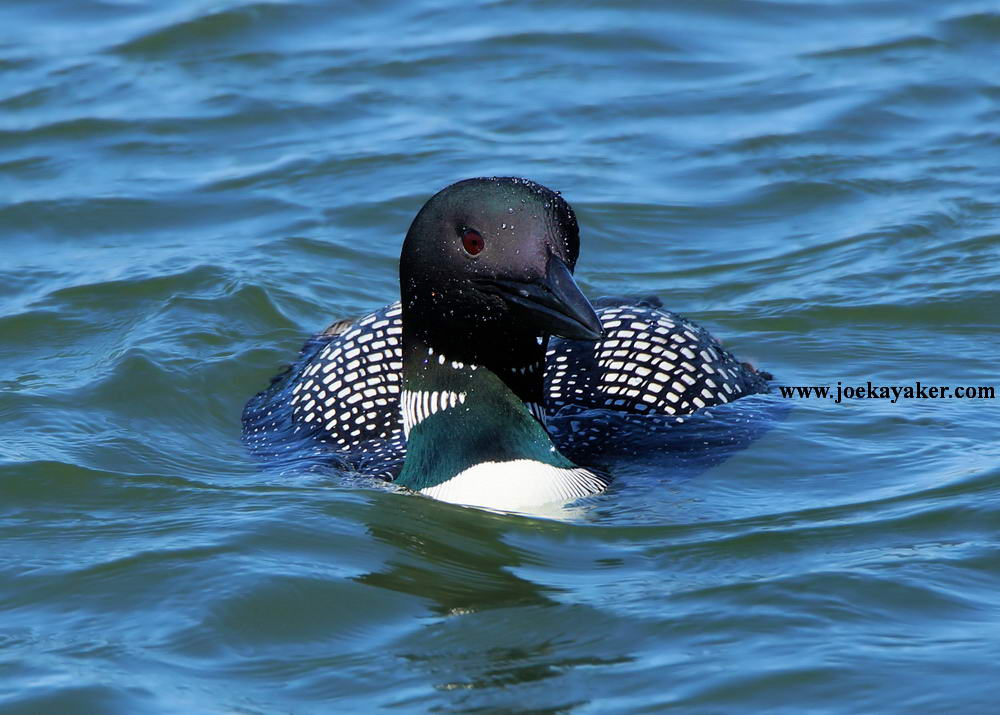
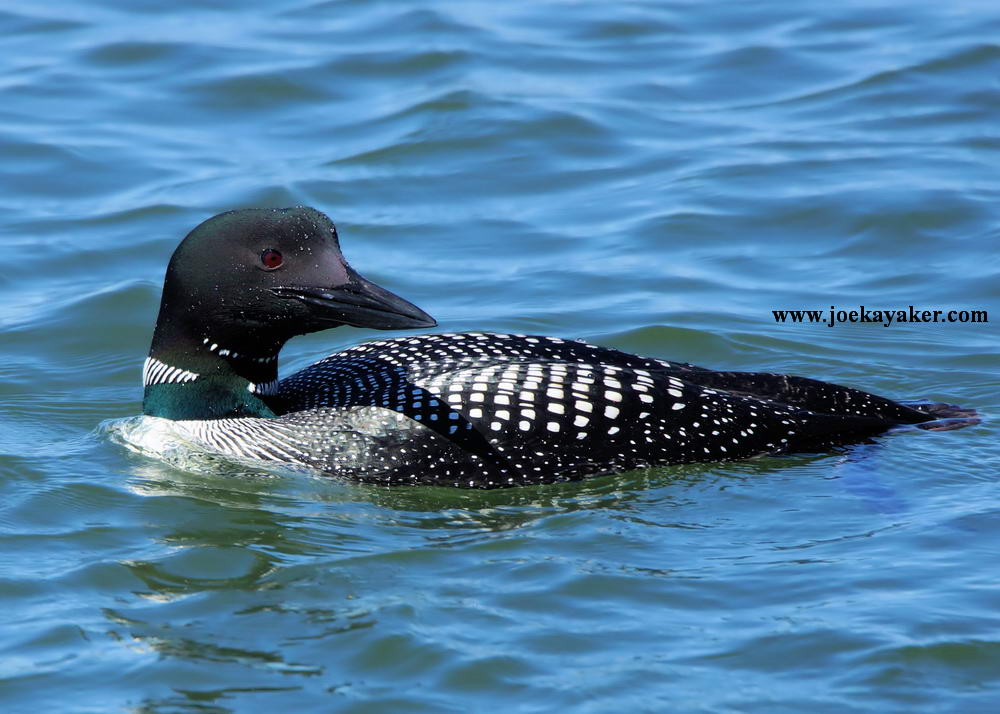
This is a Common Loon in all it’s breeding plumage glory. This is one beautiful bird. Loons often winter here on Long Island before heading north to breed and raise families. Unfortunately, their winter plumage is very plain. It’s not until Spring that they get that black and white checked body and neck or that wonderful green cummerbund on the lower part of the neck. This particular bird is one of the final holdouts left here on the Island. I imagine he’ll be gone by next week or even sooner but in the meantime, it is a real treat to see such a magnificent bird in the harbor. JK
JK
Thursday, April 18, 2019,
JK
Tuesday, April 9, 2019,
Spring Peepers are one of the harbingers of Spring. In fact, that’s where the first part of their name comes from. The Peeper part comes from the sound that the males make to attract females. Their high pitched “Peeps!” can be heard from quite a distance. We’re talking miles here. The males, who call from the edges of ponds and lakes, create their calls by inflating and deflating vocal sacs that are beneath their throats.
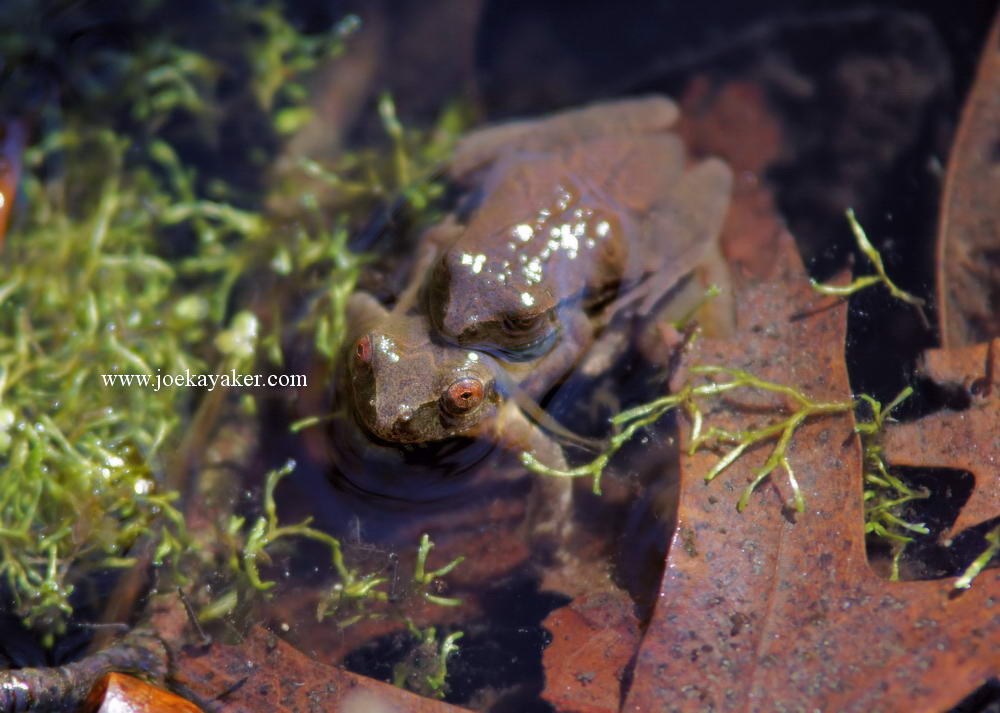
Last week, while walking through one of my favorite places, I stopped off at a freshwater pond in the middle of the woods. I could hear Spring Peepers everywhere. Their calls were coming from the far side of the pond as well as my side of the water. I could hear them to my left as well as my right. I could even hear some behind me, but try as I might, I could not locate a single Spring Peeper. They were all around me but I just couldn’t find any.
I decided to sit by the edge of the pond and just wait to see what might come my way. Sometimes, that’s what Nature Photography is: just waiting and watching. And listening, of course. I did a lot of listening that day. I spent over two hours by the pond listening and looking for those tiny frogs that I just could not find. I really, really wanted to get a shot of a male with its vocal sac inflated and calling. I had absolutely no luck.
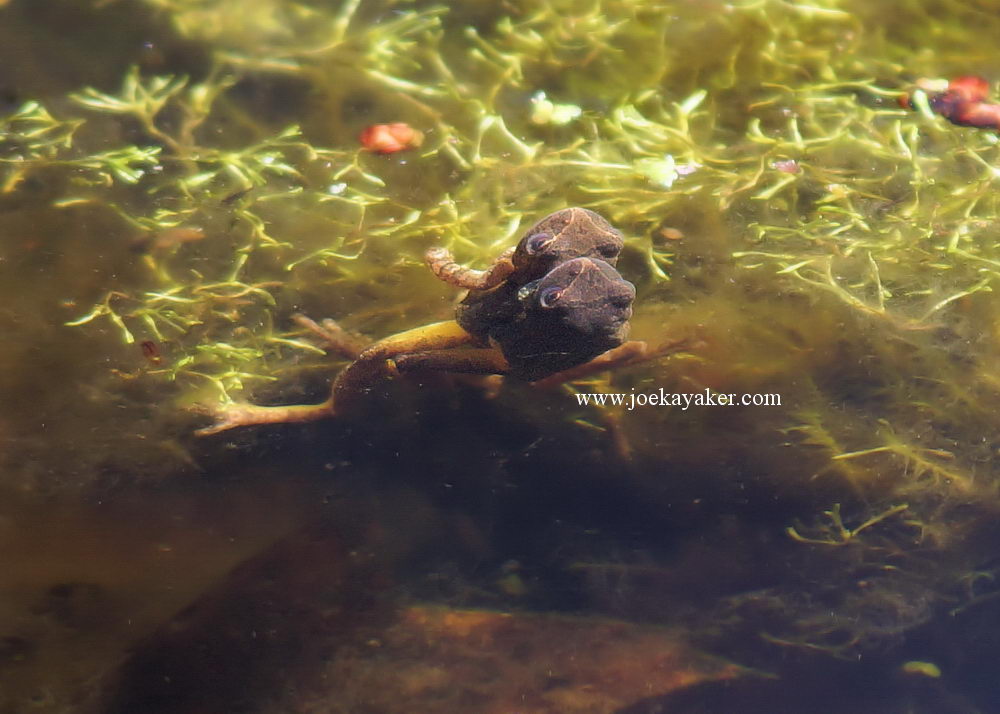
However, my patience and persistence did pay off to net me two equally interesting photos. While I was unable to find and photograph a male calling for a female, I did get lucky enough to find two different couples who had already found each other. The male, which is smaller than his counterpart, rides on the back of the female till she is ready to lay her eggs, at which point he’ll fertilize them. In the top photo only the female’s head is out of the water and in the second photo, both frogs are completely submerged. I may not have gotten the shot I was looking for, but I did manage to get some decent pics after all. JK