Two Green Frogs At Avalon

Sunday, June 23, 2013,

I took an early morning hike through Avalon Preserve Friday. It was the first day of summer and truly beautiful. ‘Glorious’ as my friend Sue would say. As soon as I entered through the gate, Catbirds were serenading me. Always a good start to any day. After climbing the stone steps to where the Frog Pond is – that’s what I call it, I don’t know that it has an official name – I found myself being serenaded by an entirely different set of critters.
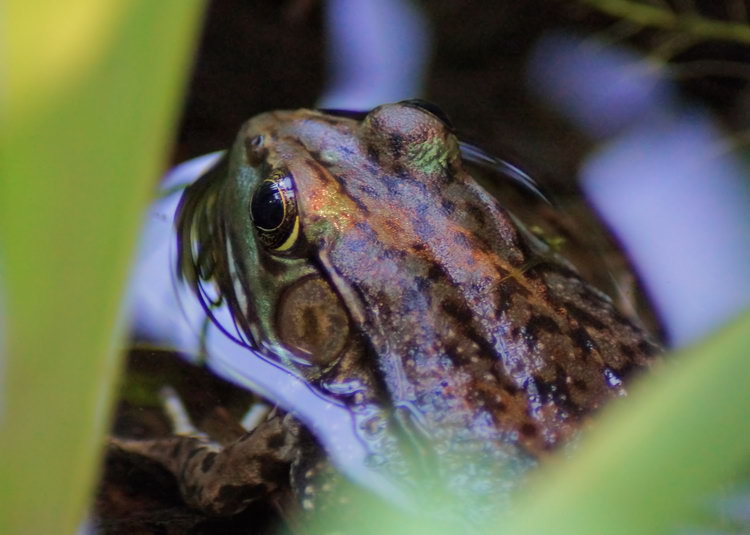
The banjo twang of the Northern Green Frog my not be as intricate or downright pretty as the melodies of the Gray Catbird, but to me it is no less welcome. When I was growing up, frogs (and toads) were everywhere. Their calls, especially at night, were a natural part of the landscape. The choruses of several species of frogs near any body of fresh water was a given from early spring throughout the entire summer.  But we live in a different world today. Amphibians have been in crisis for over two decades. They have been disappearing worldwide at an alarming rate. Those choruses that have provided the background soundtrack on this planet for over 370 million years are being silenced all too rapidly. These songs were already ancient when the first dinosaurs started showing up, let alone Catbirds. I miss those songs; I miss their sheer abundance. I think the whole planet is a lesser place without them. So when I tell you that I appreciate the song of our local frogs, from the deep bass of Bullfrogs to the high soprano calls of Spring Peepers and all those in between, please note that this is one occasion when I’m not being a wiseguy.
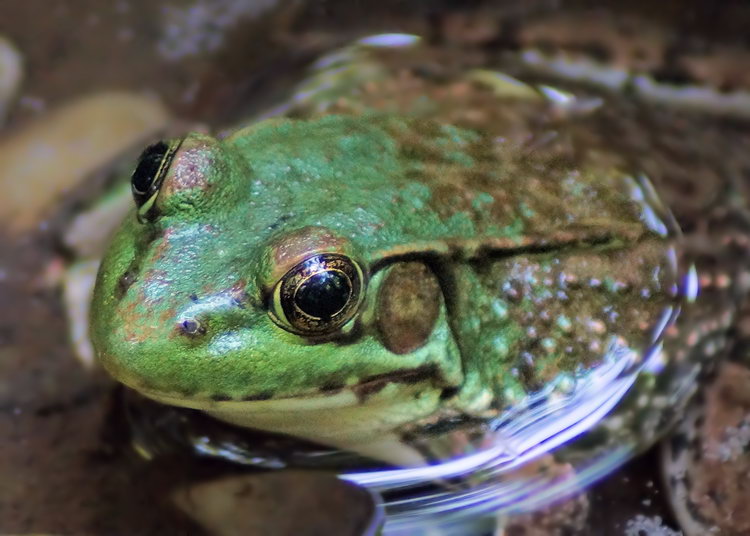
These pics are of two different Northern Green Frogs. As you can see, Green Frog coloration can vary quite a bit even amongst the same population. I took the first shot just after six AM. (I told you I was out early). The second shot was taken just before eight after I had strolled through Avalon’s fields. As always, I was out looking for pics to take. I took well over 500 hundred photographs that morning, capturing shots of several bees, birds, flowers, rabbits, and turtles, but these two pics were my favorites of the day. They were also the most difficult. I really had to stealth both of these guys. Judging their approximate location by their calls is one thing, but actually finding them and getting close enough to grab a shot is another. When I was young, I was very good at finding and catching anything from frogs, snakes, or turtles. It was what we did when we weren’t playing baseball. To be honest, I was much better at catching critters than I was fly balls. It’s nice to know I still have some skills left. I still don’t suggest putting me in center field. JK

Yellow Warbler Collecting Nesting Material

Thursday, June 20, 2013,

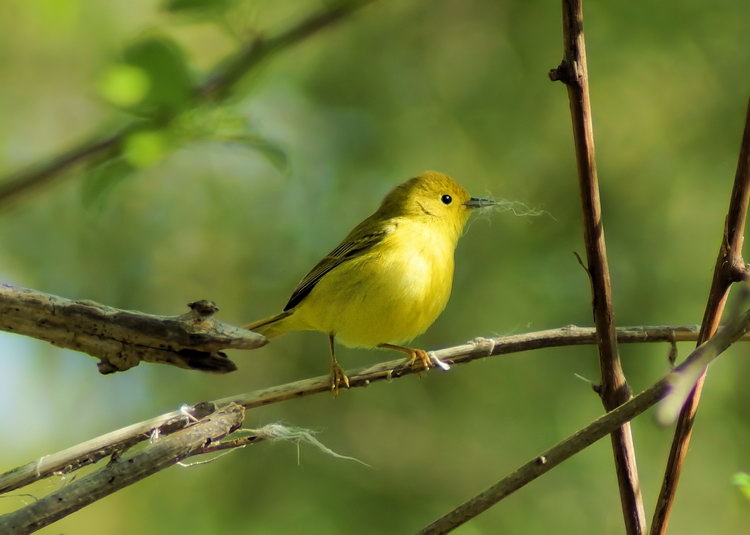
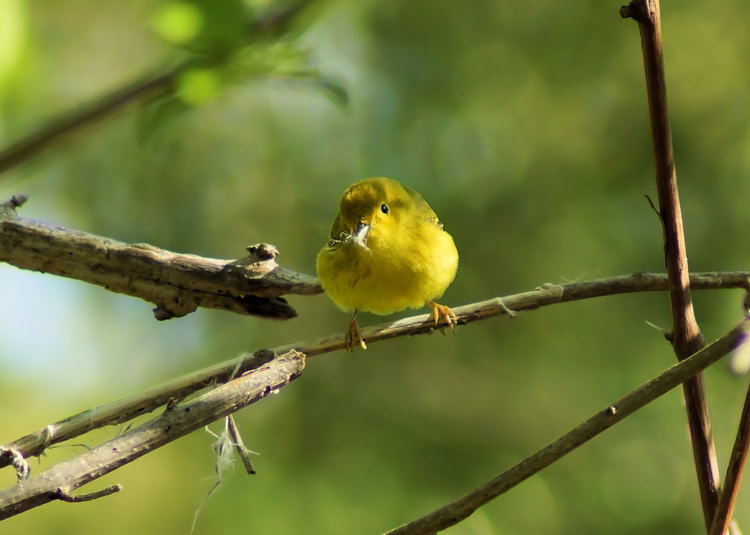
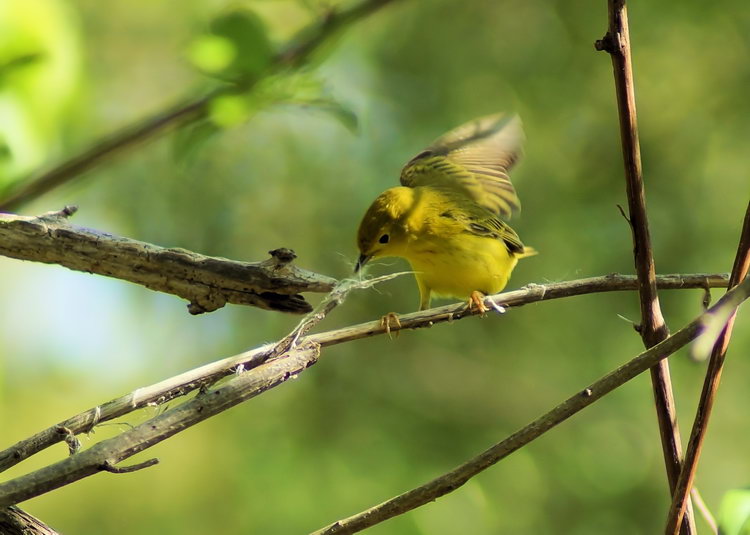
Here are four shots of a female Yellow Warbler collecting some nesting material. Just exactly what it is that she’s collecting is a bit of a mystery to me. I wanted to know what this bit of wispiness might be so I sent these pics out to several of my friends, all of whom are more knowledgeable than myself. These are the folks that make me sound informed and intelligent. It’s all done with mirrors, folks. This is probably not a surprise to many of my friends.

The only reply I received was from a buddy of mine, one of my usual go-to folks for tree identification, who who wrote in a one word email: Fuzz. I’m really not certain that ‘fuzz’ is a technical term. This is one of the problems with being a wiseguy. Sometimes, my friends feel the need to bust my horns as much as I bust theirs. Go figure.
20130514085802-5x7w

I was still honestly interested in what this young lady was collecting so I decided to hit the books. I consulted several volumes. (Doesn’t that make me sound learn-ed? Again, it’s all smoke and mirrors, dear reader.) The most informative books I could find were John Eastman’s Birds Of Forest, Yard, & Thicket and Kenn Kaufman’s Lives Of North American Birds. I even dusted off (and I mean than quite literally) my old Life Histories Of North American Warblers by Arthur Cleveland Bent. All three of these books were very informative. It turns out that Yellow Warblers make their nests from many varied sources but Mr. Kaufman puts it most succinctly: the nest is composed “of weed stalks, shredded bark, grass, lined with plant down or fur”. Both Eastman and Bent go into this in further detail, with even more materials that Yellow Warblers have been observed using. Eastman mentions tent caterpillar webbing as well as several sources of plant down. Bent could very well bore you with all the materials that these little beauties have been sighted using to make nests.

20130514085759-5x7w

Enough already with the books, right?  After all I’ve read, I think our heroine has some fur in her bill. On the branch it appears that it could be webbing of some kind but in her bill it definitely looks to be fur. As to what kind of fur (or hair) I’m thinking Possum or Raccoon. The bird in these pics is eight, maybe ten, feet off the ground. And while deer can easily jump that high, this was not a place where one would expect a deer to need to jump without dire necessity. So, again, I think I think this was some fur from a climbing Raccoon or Possum. Of course, I could be way off base and this is actually just some ‘fuzz’. JK


Tree Swallows Nesting

Monday, June 10, 2013,

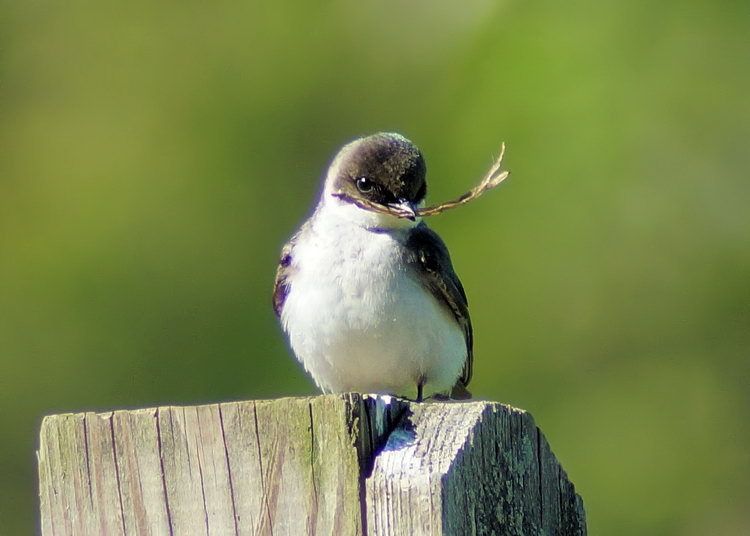
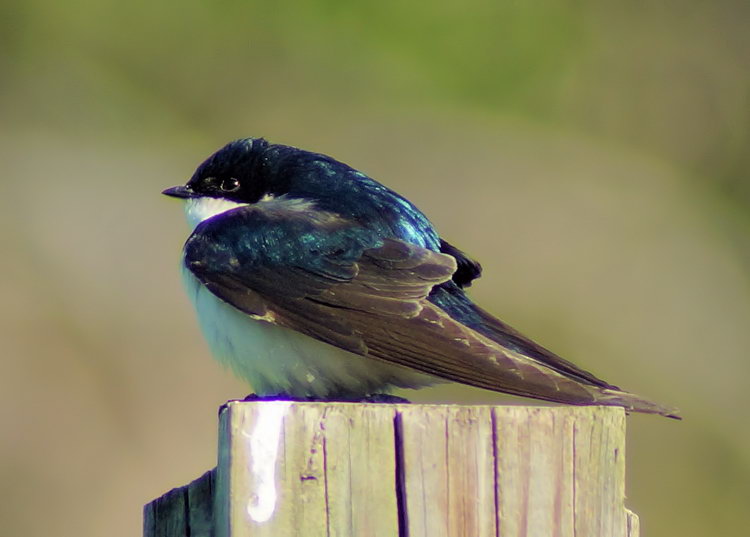
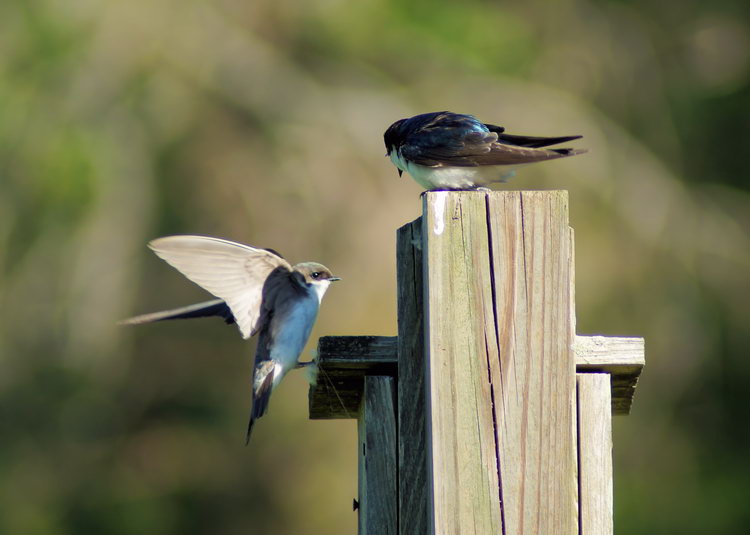
A few posts back, I mentioned that many birds make use of the Bluebird boxes at Avalon Preserve. Here are some shots of a pair of Tree Swallows who have claimed one of those boxes for their own. In the shot above, the female has just returned to the box with a likely-sized twig for the nest she’s building. 

This shot shows the male keeping watch over the box. He does a lot of this. Apparently, you can’t trust the neighbors. This kind of thinking from a swallow nesting inside a Bluebird house. Go figure.

JK